Settling a Las Vegas House When You Live Out of State
You may be several time zones away, juggling work and family, while a quiet house in the desert waits for decisions. Much of the estate work can be done remotely, and a few pieces need someone on the ground.
- Belongings can stay
- No repairs or cleanout
- We work with your probate attorney
- No agent commission
- We wait on the court
Can a nonresident serve in a Nevada estate?
Often, yes, but the answer depends on whether you were named in a will or are asking the court to appoint you. Probate for a Las Vegas house is filed in Clark County's Eighth Judicial District Court, and the rules on residency come from different chapters of Nevada law for the two roles.
If the will names you as executor
Nevada's qualification statute for executors does not impose a general residency requirement on an individual named in the will. Many out-of-state children serve as executor of a parent's Nevada estate. The court still reviews your qualifications and may set conditions such as a bond, so confirm the details with the estate's attorney.
If you are seeking letters of administration
Without a will, or when no named executor can serve, the court appoints an administrator. Under NRS 139.010, a nonresident generally does not qualify for letters of administration unless he or she associates as coadministrator a Nevada resident or a banking corporation authorized to do business in the state. Families often ask a trusted relative or friend in Nevada to serve alongside them. The statute is posted in NRS Chapter 139 on appointment of administrators.
Once appointed, order several certified copies of your letters. Banks, the title company, utilities, and the insurer may each ask for one, and requesting them while you are still in touch with the court clerk saves a second round of mail. If the appointment is delayed and the house needs protecting, the court can name a special administrator to preserve estate property in the meantime.

When your parent also lived outside Nevada
Ancillary probate in Clark County
Some families face the reverse problem: the person who died lived in California, Arizona, or elsewhere, and owned a Las Vegas house as a second home or rental. The main estate is handled where they lived, but Nevada real property generally needs its own Nevada proceeding, called ancillary probate, before it can be sold or distributed. The court can admit a will that was already proved in another state, using properly authenticated copies of the out-of-state filings.
Ancillary cases follow Nevada's sale rules, including court confirmation where required, so our page on selling during an open Clark County case applies once letters are issued. If the out-of-state owner put the house in a living trust, a court case may not be needed at all; the successor trustee usually sells, as described in our guide for trustees selling a house held in trust. Your home-state attorney and a Nevada probate attorney should coordinate on which path applies.
Whenever You're Ready
There is no deadline on our side. Tell us about the house and where things stand with the estate, and we will explain what a direct sale could look like, including how it would fit with your attorney and the court.
If you would rather hear a voice first, the red button at the bottom of the screen calls our line.
Looking after an empty house from far away
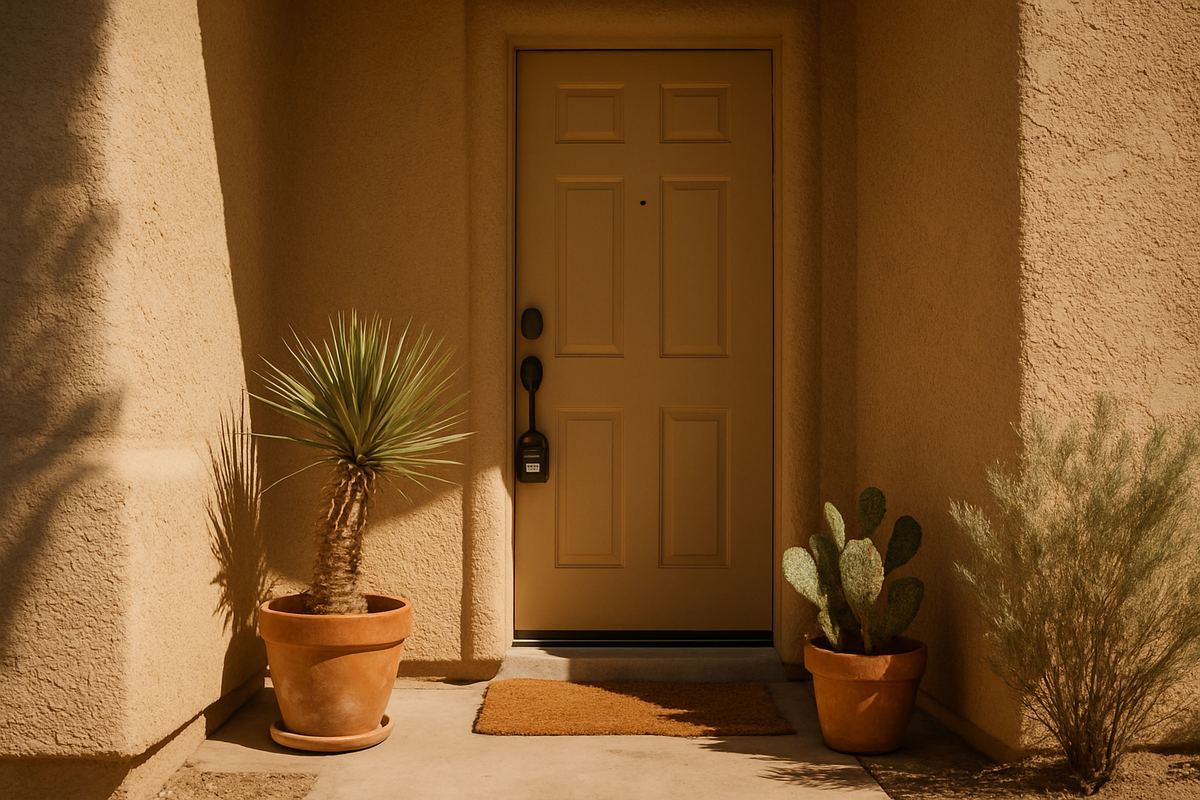
A vacant home in the Las Vegas heat does not take care of itself. Whether it is a single-story house in Sun City Anthem in Henderson with an active homeowners association, or a family home in Spring Valley, the first weeks matter.
Insurance, utilities, and mail
Call the homeowners insurer and disclose that the house is vacant; many policies treat vacancy differently. Keep the estate's electric account active, since the air conditioning is what holds off heat damage, and forward the mail so tax bills, HOA notices, and utility statements reach you.
Securing and checking the property
Change or rekey locks if many people had keys, store valuables and important papers, and arrange for a neighbor or local contact to walk by regularly. A small leak can go unnoticed for weeks in an empty house. If the place is full of a lifetime of belongings and you cannot sort it in a weekend visit, our notes on a house still full of a parent's things explain your options, including leaving items behind in a sale.
What can happen remotely and what needs a local hand
| Task | Usually remote? |
|---|---|
| Working with the estate's Nevada probate attorney | Yes, by phone, video, and email |
| Reviewing and signing a purchase agreement | Yes, often electronically, with attorney review |
| Signing closing documents | Often, through the title company's arrangements for notarized signing where you live |
| Walking the house, checking for leaks, rekeying | Needs someone local |
| Sorting and removing belongings | Needs someone local, or a buyer who takes the house as-is |
Ask your title company early how signing will work for you. Remote and mail-away signing options vary by company and by document.
Selling with as few flights as possible
Here is how a sale to us usually runs for an executor who lives elsewhere:
- Talk with us and your attorney. We confirm you have letters or other authority, and what the court still requires before a sale can close.
- Let us see the house without you. A local relative, neighbor, or your attorney's office can let us in, or we can arrange access through a lockbox you control.
- Review a written cash offer from home. It is sent to you and your attorney together, so questions get answered in writing.
- Sign through title. The title company coordinates any court confirmation, payoffs, and signing arrangements, and sends the estate's proceeds by the method it approves.
Since we take the inherited house in its current condition, there is no repair list to manage from across the country and no showings to schedule. The details of each stage are on our page describing the sale process, and there is more background on our estate-buying company and its approach if you would like a sense of the people the estate would be dealing with. When you are ready, our contact form is the easiest way to start from wherever you are. This page offers general estate information, not legal advice; residency, bond, and ancillary rules should be confirmed with a Nevada probate attorney.
A Few Common Questions
Do I have to move to Nevada or hire a Nevada co-executor?
No move is required. An individual named as executor in the will is not generally barred from serving because they live elsewhere, though the court may set conditions. Administrators are different: a nonresident usually needs a Nevada resident or qualified bank as coadministrator. Your Nevada probate attorney can confirm what the court will require in your case.
My parent lived in another state but owned a Las Vegas house. Where is probate filed?
The main estate is usually handled in the state where your parent lived. The Las Vegas house generally needs a separate ancillary proceeding in Clark County before it can be sold, unless it passed outside probate through a trust, deed upon death, or survivorship deed. An attorney in each state can coordinate the two cases.
Do I need to fly to Las Vegas to close the sale?
Often not. Many executors review offers electronically and sign closing documents with a notary near home, using arrangements the title company sets up. Some documents may have specific signing requirements, so ask the title company early. We can work around your schedule and do not need you present when we see the house.
What should I do first if the house is empty right now?
Tell the insurance company the home is vacant, keep the power on so the air conditioning runs, forward the mail, and change the locks if many people had keys. Then ask someone local to check on it regularly. Those steps protect the estate's main asset while the court process moves forward.